Falmouth, the Georgian port of Trelawny
Laid out in the sugar boom of the late eighteenth century, Falmouth keeps one of the most complete Georgian street plans in the Caribbean. Walk it slowly, ideally on a day without a cruise ship.
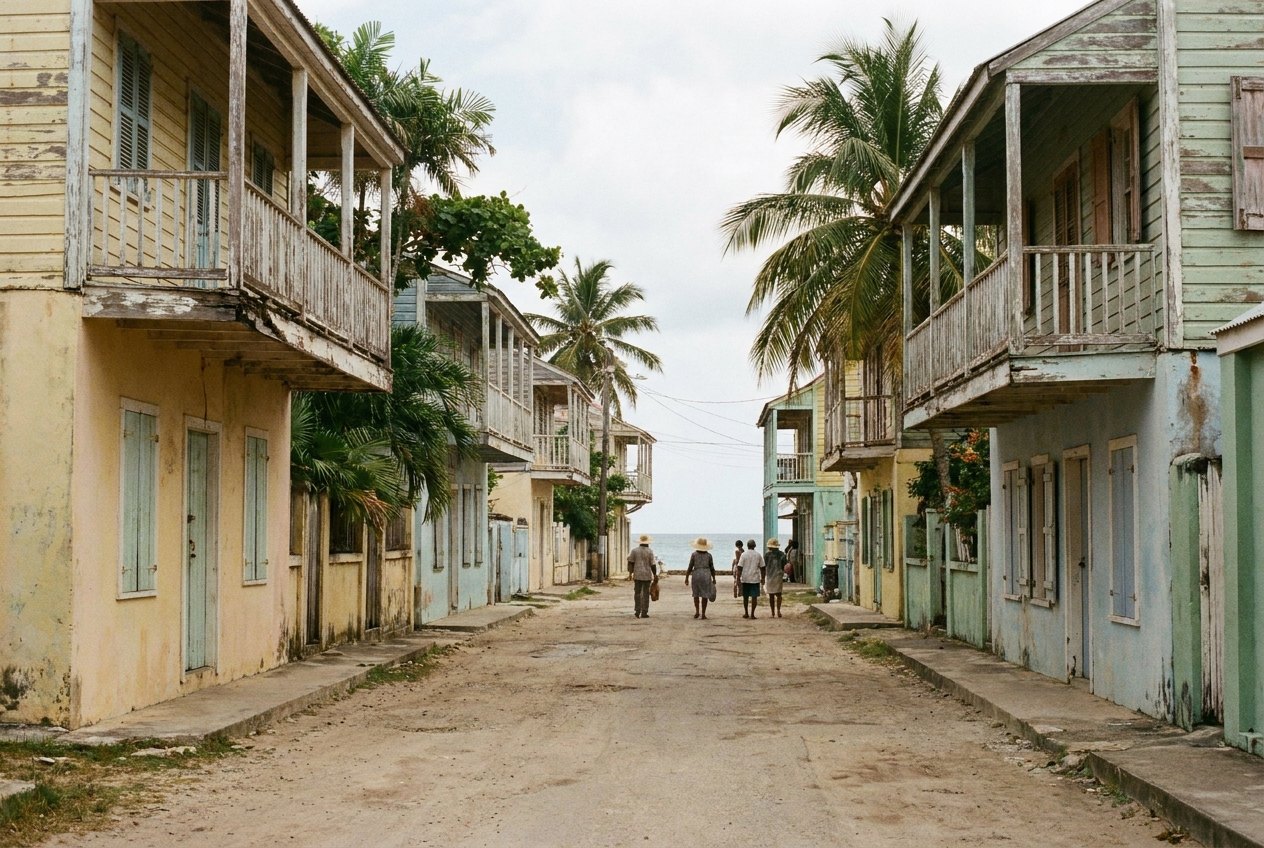
Falmouth is the capital of Trelawny, a small town on a flat stretch of shore where the Martha Brae river reaches the sea. It looks modest at first: low buildings, a market, traffic around a square. Look up and around, though, and the shape of a Georgian port comes through, with straight streets, cut-stone walls, timber balconies and churches built when this was one of the busiest harbours on the island.
A town built on sugar
The town was laid out in the 1770s and named after Falmouth in Cornwall, the birthplace of Sir William Trelawny, then governor of Jamaica. It replaced the older settlement at Martha Brae, a short way upriver, whose access to the sea had become difficult. Trelawny was then among the richest sugar parishes in the colony, and Falmouth grew as the port that shipped its sugar and rum to Britain and received goods, timber and enslaved Africans in return.
For a few decades around 1800 the wharves were crowded and merchants built solid houses near the harbour. The boom did not last. As sugar prices fell in the nineteenth century, and especially after emancipation in 1838, the planters' trade shrank and Falmouth became a quiet country town. That long quiet is the reason so much of the old fabric survives: there was little money to tear it down.
The courthouse and the square
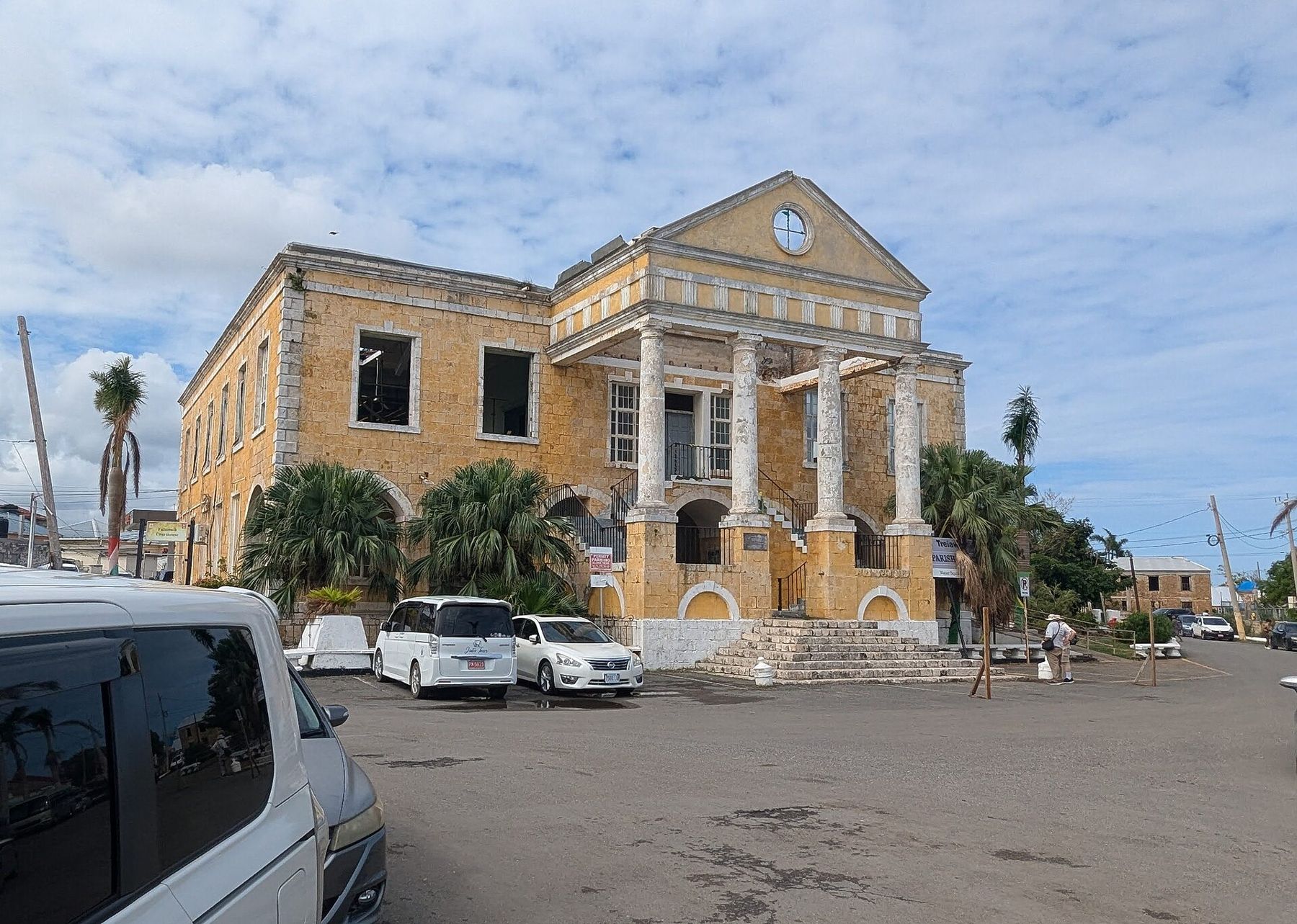
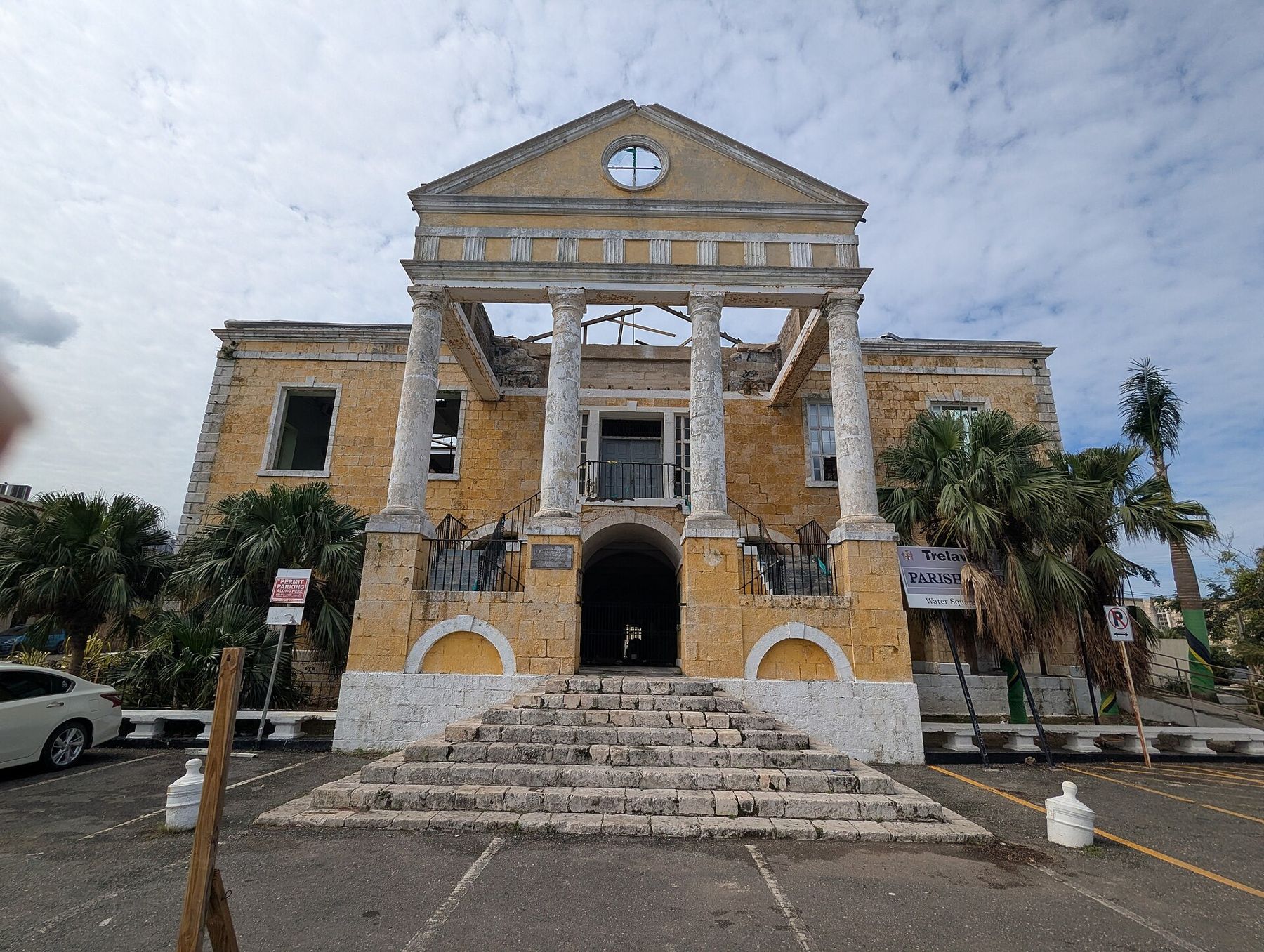
The parish courthouse is the building most visitors photograph. It was built in the early nineteenth century in the Georgian style, with a pediment, a round window and a portico of tall columns over a double staircase. It has been damaged and repaired more than once, and its condition varies; at times parts of it have stood roofless behind the front. Even so, it marks the civic heart of the old town.
Close by, Water Square takes its name from the town's old public water supply. In the early nineteenth century Falmouth piped water from the river into a reservoir here, an advanced arrangement for a colonial town of its size. The square is now a busy junction, but the name keeps the memory.
Churches and the road to freedom
Two churches tell much of Falmouth's story. St Peter's Anglican Church, near the shore, is one of the older church buildings on the island, set in a walled churchyard with old tombs. It was the church of the colonial establishment.
The William Knibb Memorial Baptist Church tells the other side. Knibb was an English Baptist missionary who worked in Falmouth in the years around emancipation and became one of the strongest voices against slavery. After the uprising of 1831, his chapel was among those destroyed by planters who blamed the missionaries. He travelled to Britain to campaign for abolition, and on the night that full freedom arrived in 1838 he led a service here at which a coffin holding symbols of slavery, including a chain and a whip, was buried. The present church stands on the site, and it remains a place of worship, so visit with respect.
Side tripRafting the Martha BraeThe wider story of the uprising and its leader, Sam Sharpe, is told in the guide to Montego Bay beyond the resorts.
Walking the grid
The pleasure of Falmouth is in the walking. The streets run in a regular grid back from the harbour, and many houses keep features that are rare elsewhere: stone ground floors with timber upper storeys, wide verandas, louvred shutters and fretwork along the eaves. Some are restored, some lived in, some empty and leaning. Heritage groups have worked for years to protect them.
- Start at the courthouse, walk towards the water, then loop back through the side streets.
- Look for the market, still the centre of everyday trade.
- Many buildings are private homes and businesses. Photograph from the street and ask before you photograph people.
- Midday heat is strong on the open streets; carry water and keep to shade.
Cruise days and quiet days
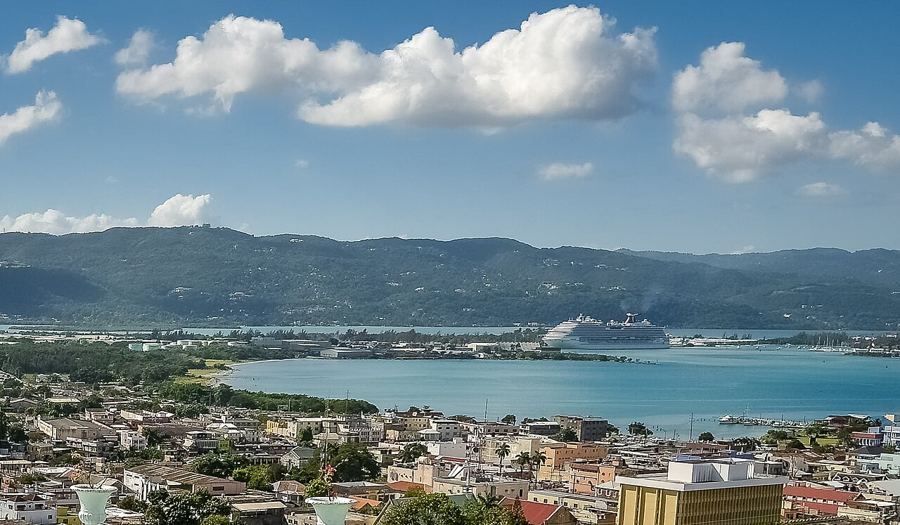
In the early 2010s a large cruise pier opened on the harbour, built to take some of the biggest ships afloat. It brought a fenced port area with shops near the water and changed the rhythm of the town. On days when a ship is in, the streets near the pier fill with visitors, vendors and taxis, and the main sights can feel crowded. On days without a ship, Falmouth goes back to being a country town where people shop, talk and wait for route taxis.
Both moods are real, but the old town reveals itself best on a quiet day.
Around Falmouth
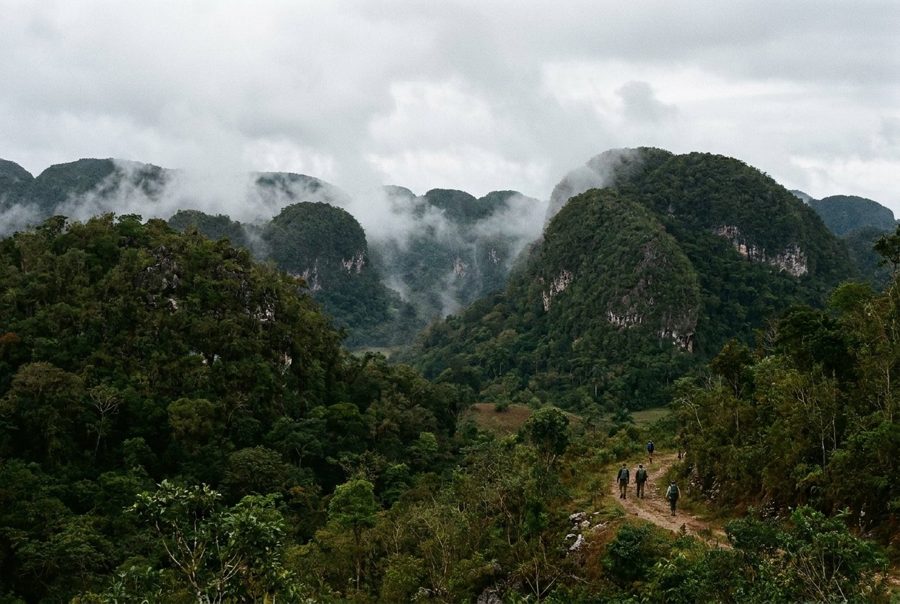
Falmouth makes a natural base for the sights of Trelawny. A short drive inland brings you to the bamboo rafts of the Martha Brae, and just east of town the bay known as the Luminous Lagoon glows on dark nights. The great houses at Rose Hall and Greenwood lie on the road back towards Montego Bay, and the forested hills of Cockpit Country rise to the south.
Plan a morning walk in town, a slow lunch of something from the roadside, an afternoon on the river and an evening by the lagoon. It makes a full and well-paced day.
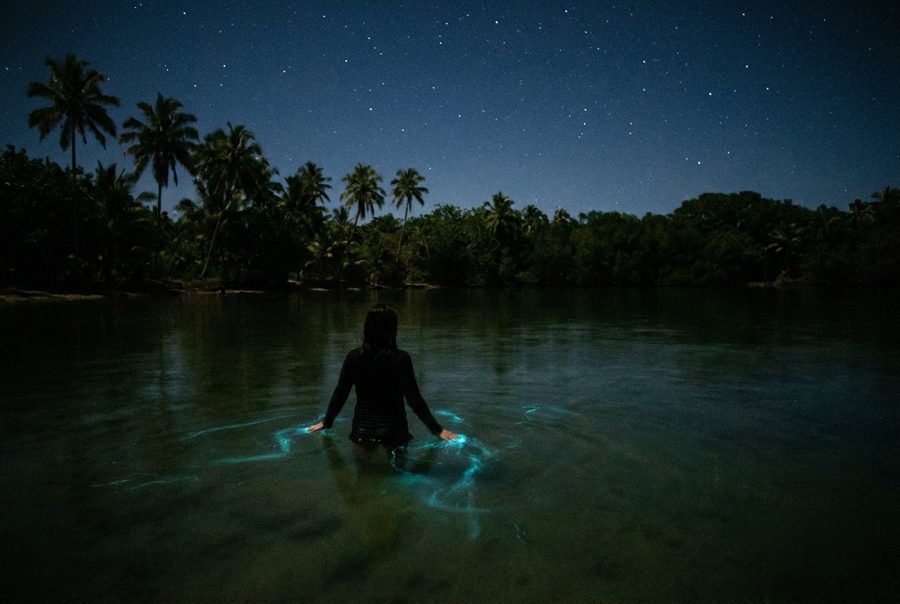 The Luminous Lagoon at night
 Cockpit Country and the birds of the west
 Montego Bay beyond the resorts