Jerk, patties and ackee: eating in Jamaica
Jamaican food is bold, smoky and generous, shaped by Taino, African, European, Indian and Chinese roots. Here is what to look for, when to eat it and how to order.
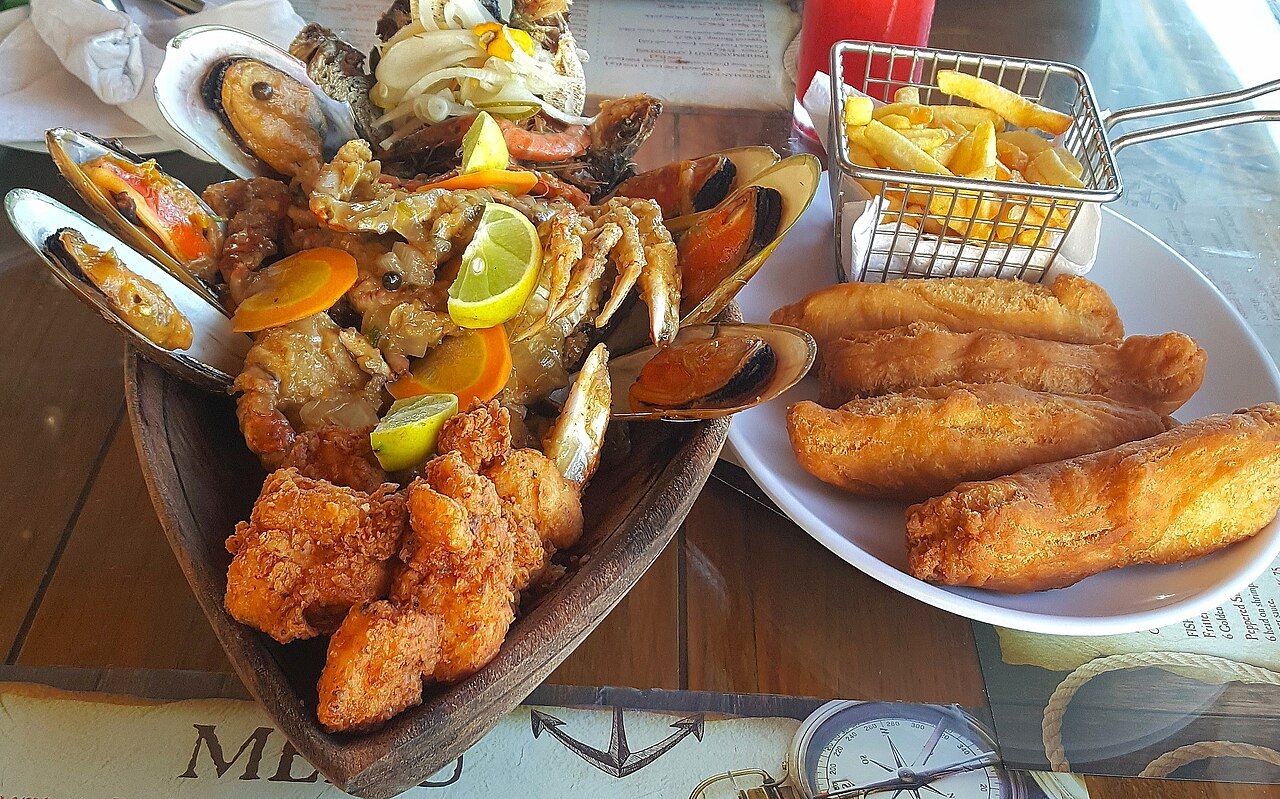
Food in Jamaica is a story of the island's history on a plate. The Taino cooked over open fires and grew cassava. Enslaved Africans brought cooking traditions, crops and ways of using every part of what was available. The British left salted fish and baked goods, and workers from India and China who came after emancipation added curry, roti and new ingredients. The result is a cuisine that is bold, smoky, often fiery and always generous.
The best of it is not hidden in fine-dining rooms. It is at roadside jerk pits, market stalls, small cookshops, bakeries and family kitchens. Eat where the queue is long and the food is turning over quickly, and follow your nose.
Jerk
Jerk is the island's signature. Meat, usually pork or chicken, is rubbed with a marinade built on allspice, called pimento in Jamaica, Scotch bonnet pepper, scallion, thyme and other seasonings, then cooked slowly over green pimento wood, often under sheets of zinc that trap the smoke. The method is credited to the Maroons, who cooked this way in the hills, and it has roots in older Taino practice.
Look for jerk pits by the roadside, with smoke rising and a chopping block at the front. Jerk is usually sold by weight. Point at what you want, say how much, and it will be chopped and wrapped in foil or paper. It comes with hard dough bread, festival or roasted breadfruit. Boston Bay, near Port Antonio, is often called the home of jerk, but good jerk is found all over the island.
Breakfast and the national dish
Ackee and saltfish is the national dish. Ackee, a tree fruit brought from West Africa in the eighteenth century, opens on the tree into red pods with glossy black seeds and soft yellow flesh. Cooked with salted cod, onions, tomatoes and peppers, it looks a little like scrambled egg and tastes rich and mild. Ackee must only be picked when the pod has opened naturally; unripe ackee is poisonous, which is why it is always prepared by people who know it.
Ackee and saltfish is usually eaten at breakfast with fried dumplings, boiled green banana, yam or roasted breadfruit. Other breakfast favourites include callaloo, a leafy green steamed with onion and tomato, and porridges of cornmeal, plantain or peanut, sweetened and spiced with nutmeg and cinnamon.
Everyday food
Patties and bakery food
The patty is Jamaica's fast food: a flaky golden pastry filled with spiced beef, chicken, vegetables or other fillings. Eat it hot, on its own or tucked inside a soft coco bread. Bakeries also sell hard dough bread, bulla cake, a dense spiced cake, and gizzada, a small pastry tart filled with sweet grated coconut.
Rice and peas and Sunday dinner
Rice and peas is cooked with kidney beans, coconut milk, thyme, scallion and a whole Scotch bonnet for flavour. It is the base of Sunday dinner and many weekday plates, alongside brown stew chicken, curry goat, oxtail with butter beans, or fried chicken. Curry goat, slow-cooked until tender, shows the influence of Indian cooking on the island.
Side tripReggae, ska and the sound of the islandFrom the sea and the river
On the coast, fish is often fried whole and served escovitch style, topped with vinegar, pickled onions, carrots and peppers, with bammy, a flat cassava bread, or festival, a slightly sweet fried dumpling. Run down is a stew of fish cooked down in coconut milk. On the south coast, look for the roadside pepper shrimp sold near the Black River. In Port Royal, eating fried fish by the harbour is part of a visit.
Soups
Soup is serious in Jamaica. Red pea soup, chicken foot soup and pumpkin soup with dumplings are common, especially on Saturdays. Mannish water, a goat soup, is a feature of celebrations and is said to give strength.
Fruit by season
The island grows an astonishing range of fruit, and much of it is sold from roadside stalls and markets. What you find depends on the season:
- Mangoes are at their best in the early summer, with dozens of local varieties.
- Guinep, small green fruit with a tangy pulp around a large seed, sold in bunches, are a summer treat.
- Star apple, purple or green with a star pattern inside, is a winter fruit.
- Breadfruit, brought to the island in the 1790s, is roasted whole in the fire, then peeled and sliced.
- Otaheite apple, June plum, naseberry and soursop all appear in their own seasons.
Coconut vendors cut green coconuts with a machete so you can drink the water, then split them so you can scrape out the soft jelly. Cane is sold peeled and chopped to chew. The seasons are explained in the guide to Jamaica's seasons.
Drinks and sweets
Sorrel, a deep red drink made from the flowers of a hibiscus plant with ginger and spice, is the drink of Christmas. Fresh juices of carrot, beet, soursop and other fruit are sold everywhere, as is ginger beer. Blue Mountain coffee comes from the high slopes above Kingston, and Jamaican rum, made from cane, has a long history. At Easter, bun and cheese, a spiced dark loaf eaten with processed cheese, is a tradition across the island. Grater cake, made of grated coconut and sugar, and tamarind balls are the classic sweets.
How to eat well
- Ask about the heat. Scotch bonnet is very hot. Ask for sauce on the side.
- Carry small cash. Many stalls and cookshops do not take cards.
- Go where locals go. Busy places mean fresh food.
- Be patient. Good jerk and soups take time, and the wait is part of it.
- Water. Bottled water is easy to find.
 Getting around Jamaica without a tour
 Jamaica's seasons, rains and hurricanes
 Montego Bay beyond the resorts