Kingston, the mountains and the south
Kingston for a curious first visit
The capital is where Jamaica's art, music, politics and history come together. Give it two or three days, plan your moves, and the city opens up in ways the resorts never do.
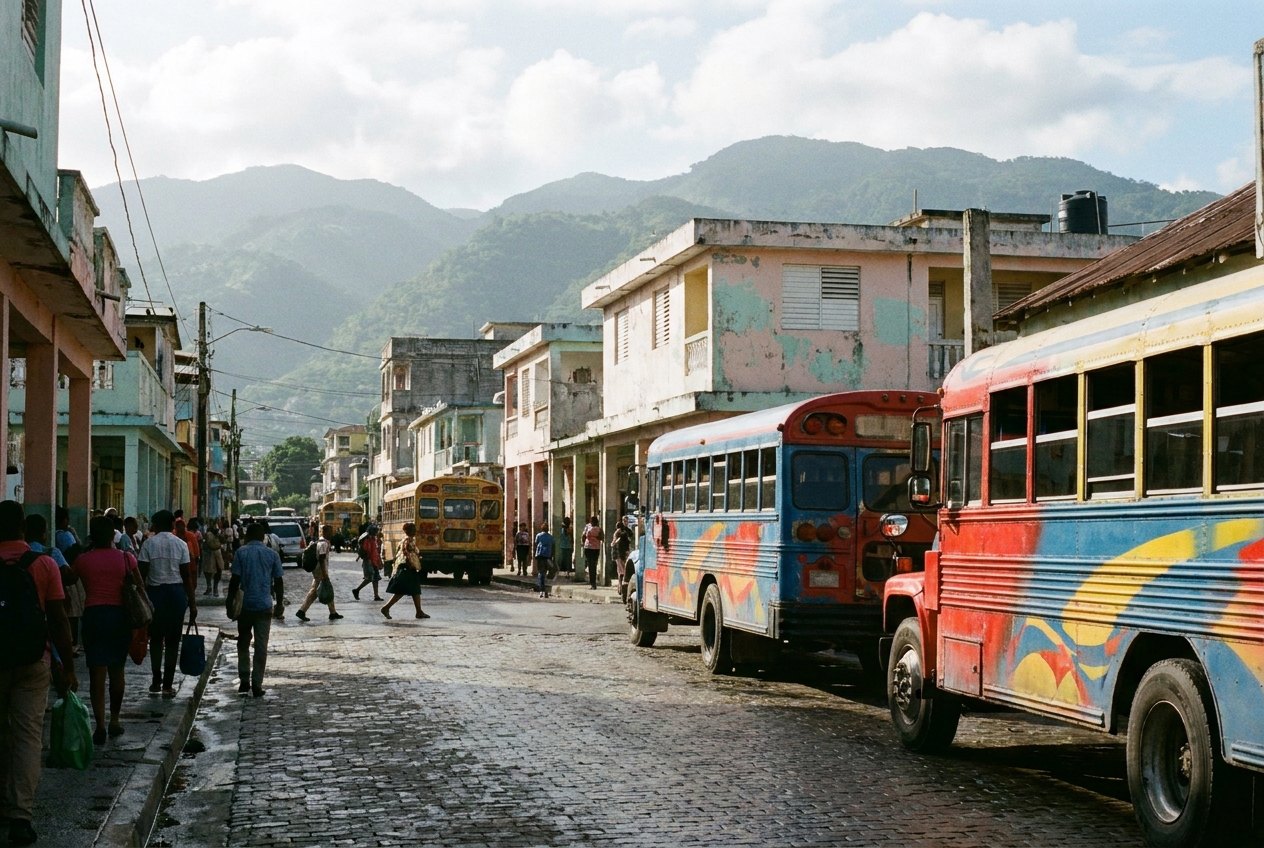
Many visitors to Jamaica never see Kingston, and many who do pass straight through on the way to the airport or the mountains. That is a pity. The capital is the place where the island's story is told most fully: in its galleries and museums, its old merchant houses, its parks and monuments, and above all in the music that grew up in its yards and streets and travelled around the world.
It is also a big, busy, sometimes hectic city, spread out between the harbour and the foot of the Blue Mountains. It rewards a little planning. Decide what you want to see each day, travel between places by taxi or car rather than wandering at random. With that approach, a first visit is relaxed and full of interest.
How the city is laid out
Kingston grew after the 1692 earthquake that destroyed Port Royal across the harbour, and it became the capital of Jamaica in 1872, taking over from Spanish Town. The old downtown sits on a grid of streets running up from the waterfront, with the Parade, now St William Grant Park, at its centre. This was the commercial heart of the city for most of its history.
Uptown, the city spreads north across the plain towards the hills. New Kingston is the business district, with offices and Emancipation Park. Further up are the leafy residential areas around Hope Road, the University of the West Indies at Mona, and Papine, where the road begins its climb into the Blue Mountains. Most of what a visitor wants to see lies either downtown near the water or along the Hope Road corridor uptown.
Devon House and the uptown sights
Devon House
Devon House was built in 1881 for George Stiebel, who made his fortune in mining and is often described as Jamaica's first Black millionaire. The house, with its wide verandahs and formal rooms, is one of the finest examples of a nineteenth-century Jamaican mansion, and its story is a reminder of the new fortunes that rose in the decades after emancipation. Guided tours show the interior; the grounds, with their lawns and shady trees, are a popular place for families, and the courtyard is known for its ice cream.
The Bob Marley Museum
Further along Hope Road, the house where Bob Marley lived and recorded in the 1970s is now a museum. Guided tours take you through the rooms, the studio space and the yard, with photographs, records and memories of the years when the house was a centre of the music world. The tour is popular.
Emancipation Park and Hope Gardens
Emancipation Park in New Kingston opened in 2002. Its walking track is busy with joggers in the early morning and evening, and at its entrance stands the bronze sculpture Redemption Song, two figures looking skyward, made to mark freedom from slavery. Further out, Hope Gardens, the island's large public botanical garden, offers open lawns, old trees and a calm break from the traffic.
With that approach, a first visit is relaxed and full of interest.
Downtown: the gallery and the waterfront
The National Gallery of Jamaica stands on the downtown waterfront, and it is the best place on the island to understand Jamaican art. The collection runs from Taino objects and colonial-era painting through the intuitive artists, the sculpture of Edna Manley and the work of the nationalist generation of the 1930s and 1940s, to contemporary painting and installation. The building is cool and calm, and a couple of hours inside gives you a different way of seeing everything you have passed on the road.
Side tripReggae, ska and the sound of the islandOutside, the waterfront looks out over Kingston Harbour, one of the largest natural harbours in the world, with the Palisadoes spit and Port Royal on the far side. A few streets inland, the Parade and the old commercial streets are busy with traffic, vendors and shoppers. Coronation Market, the city's big traditional market, is a vivid place to see the island's produce, though it is crowded and best visited with someone who knows it.
National Heroes Park, north of the Parade, holds the shrines and monuments of Jamaica's National Heroes, including Marcus Garvey, Sam Sharpe, Paul Bogle and Nanny of the Maroons, as well as the graves of several prime ministers. It is a quiet, serious place and a good introduction to the people Jamaica honours.
Trench Town and the music
Trench Town, west of downtown, was built as a government housing scheme and became one of the birthplaces of ska, rocksteady and reggae. The Trench Town Culture Yard is the yard where Bob Marley lived as a young man, now a small museum with the room he stayed in and memories of the musicians who passed through. Visits are arranged with community guides, which is the right way to come: it keeps the visit respectful and puts something back into the neighbourhood.
Music is everywhere in Kingston, from street dances and sound systems to live shows and studios. The story of how it developed, and how to find it, is told in the guide to reggae, ska and the sound of the island.
Practical sense for the capital
- Getting there. The usual road from Montego Bay follows the north coast to Ocho Rios and then the highway south over the mountains. Domestic flights also link the two cities; schedules change. Norman Manley International Airport sits on the Palisadoes, on the way to Port Royal.
- Getting around. Use licensed taxis, recognisable by their red plates, or arrange a driver for the day. City buses run across the metropolitan area, though they are slow for visitors with limited time. The guide to getting around Jamaica has more.
- Safety. Most visits are trouble-free. Keep valuables out of sight, avoid walking alone at night, and take advice from your hosts on which areas to avoid.
- Heat. Kingston is hotter and drier than the north coast. Plan museums and indoor sights for the middle of the day, and parks for the morning and evening.
- Opening times. Museums and galleries set their own hours and sometimes close for holidays or events.
Two or three days lets you see the main sights without rushing, with a morning at Port Royal and a trip up into the hills. Kingston asks a little more of a visitor than the resort towns, and it gives a great deal more back.
 Port Royal, the town the sea took
 Black River, YS Falls and Treasure Beach
 Accompong and the Maroons