Negril, Seven Mile Beach and the West End cliffs
At Jamaica's western tip, a long beach of pale sand faces one way and a line of limestone cliffs faces the other. Negril is built for slow days and late sunsets.
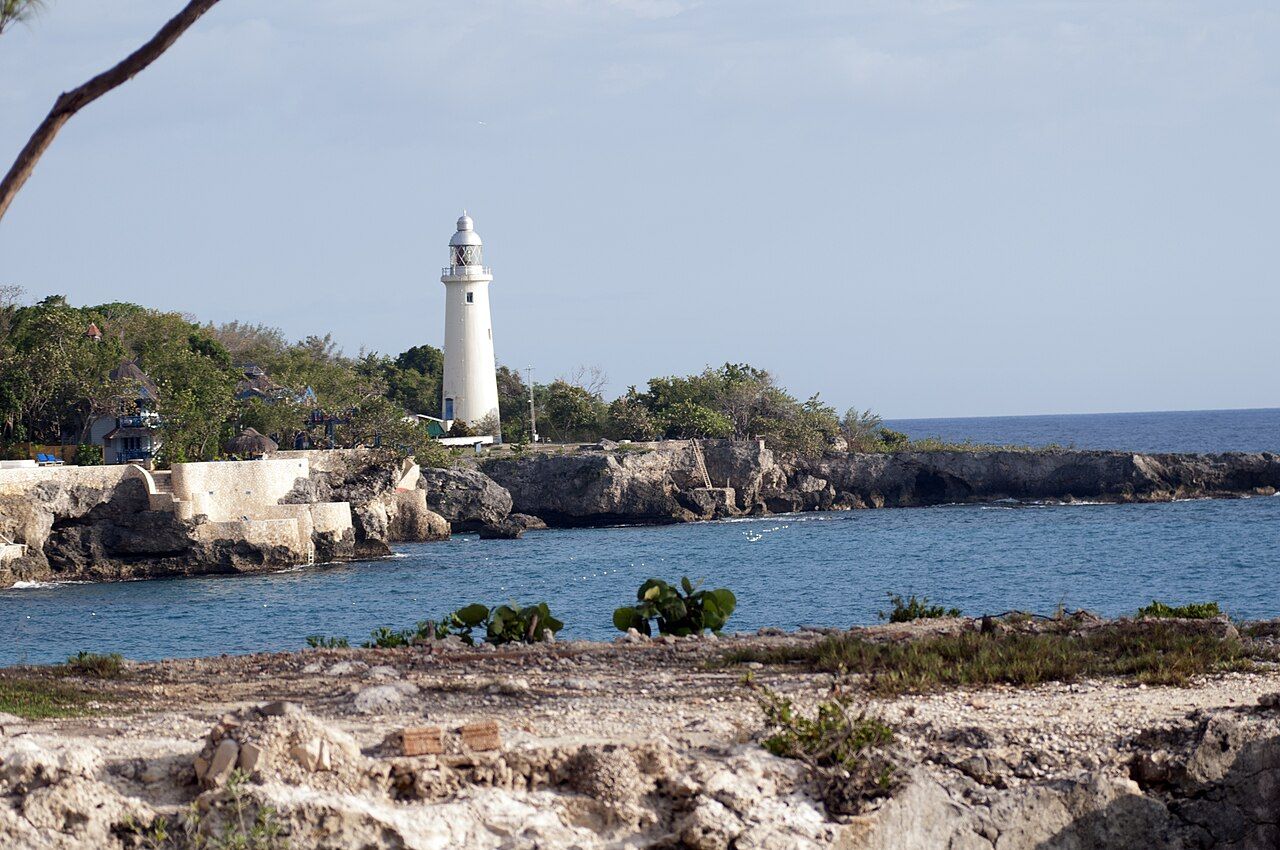
Negril sits at the far western end of Jamaica, where the coast road from Montego Bay finally runs out of island. The town is split into two very different halves. North of the small centre, a long, straight beach of soft sand runs along a calm bay. South and west, the land rises into low limestone cliffs, riddled with caves and dropping straight into deep, clear water. Between them, the sun sets over open sea every evening, and much of Negril's day is arranged around that moment.
It was a fishing village with few visitors until the late 1960s and 1970s, when travellers drawn by the empty beach and the slow pace began to arrive, and the town has grown steadily since. The beach strip is now lined with hotels and guest houses of every size, but local rules have long limited building heights, so trees still stand taller than most roofs along the sand.
Seven Mile Beach
The beach that made Negril's name is known as Seven Mile Beach, though the stretch of sand is somewhat shorter than the name suggests. It curves gently along Long Bay, with shallow, usually calm water and a sandy bottom that slopes slowly out. On most days it is a good place to swim, float and walk, and the walk from one end to the other takes a couple of hours at an easy pace.
Behind the beach runs Norman Manley Boulevard, the main road north towards Hanover. The beach is public in principle, and you are free to walk its length along the water's edge, though much of the land behind it belongs to hotels and businesses.
Living with the beach hustle
Walk the sand and you will be offered boat rides, hair braiding, souvenirs, drinks and other things. Most vendors make a living this way and accept a polite answer. A friendly "no thanks, maybe later" is fine; there is no need for rudeness or for buying something you do not want. If you do want a service, agree the price first.
The beach is changing
Like many beaches in the Caribbean, Seven Mile Beach has lost sand in places over recent decades. Damage to the reef and seagrass offshore, storms and building close to the shore all play a part. Efforts to protect the beach and the reefs continue, and visitors can help by not touching coral, not buying shells or coral souvenirs and using reef-safe sunscreen.
The West End cliffs
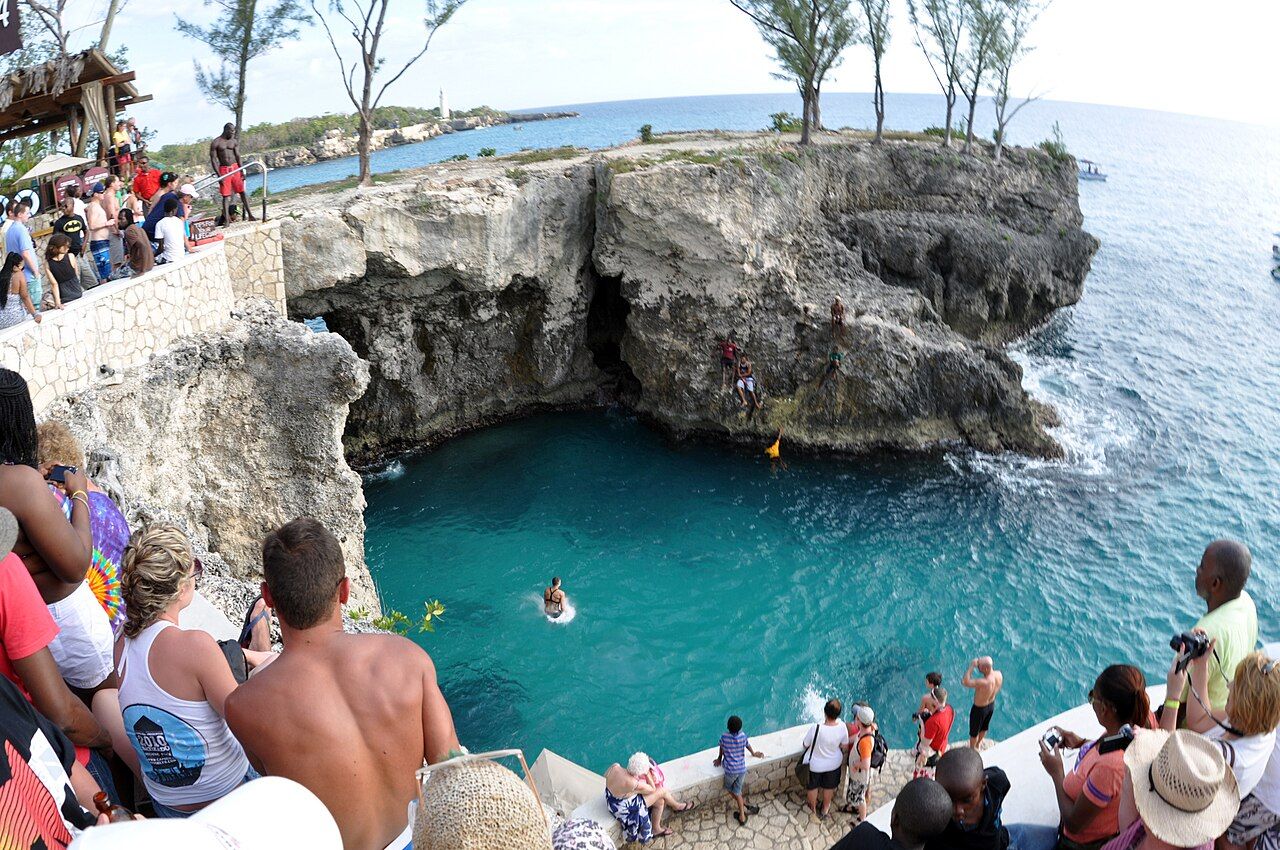
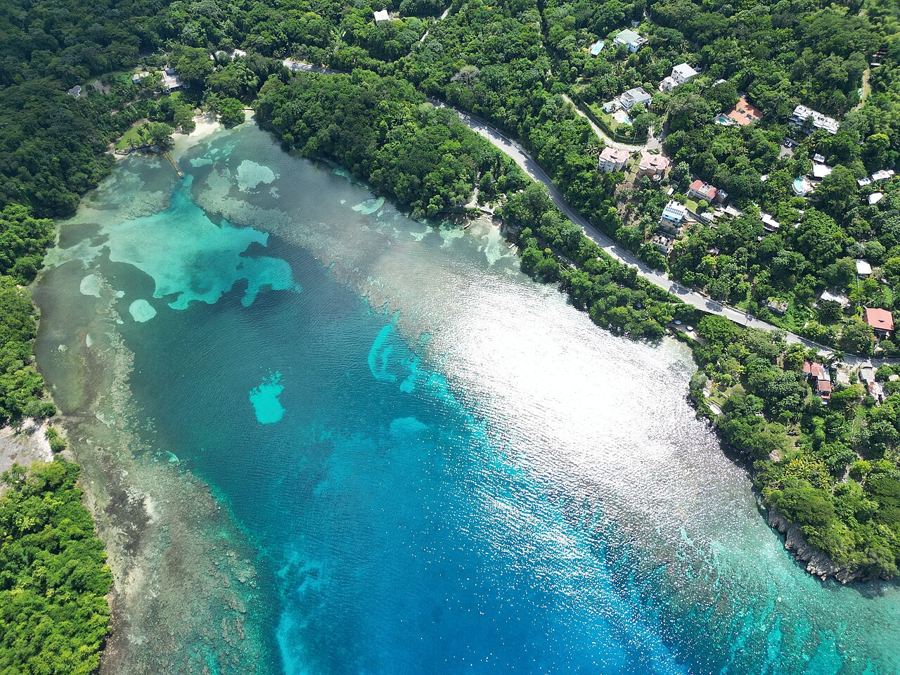
South of the town centre, the road climbs onto the West End, a stretch of low limestone cliffs. Here the sea is deep right at the rock edge, and the water is often astonishingly clear, showing fish and coral well below. Ladders and steps cut into the rock lead down to the water in many places, and the cliffs are honeycombed with small caves and arches.
Here the sea is deep right at the rock edge, and the water is often astonishingly clear, showing fish and coral well below.
The West End feels quieter and more spread out than the beach, with small guest houses and cottages set back among gardens on the clifftop. The snorkelling directly off the rocks can be very good in calm weather.
Cliff jumping with sense
Jumping from the cliffs into the sea is part of the West End's reputation. Some spots are low and simple; others are high and serious. Accidents happen every year, often involving visitors who misjudged the height or the depth, or who had been drinking.
- Check the depth and the landing area before jumping, and look for rocks under the surface.
- Know how you will get out of the water. Climbing back up can be harder than the jump.
- Never jump after alcohol, at night or in rough sea.
- Start low. There is no need to prove anything.
- Locals who offer to dive for tips are trained to it; do not copy them.
The lighthouse and the sunset
At the far end of the West End road stands the Negril Lighthouse, on the westernmost point of Jamaica. The white tower dates from the late nineteenth century and still guides ships in the passage between Jamaica and Cuba. The grounds and the rocky shore around it give wide views west over open water.
Sunset is the daily event in Negril. On clear evenings, people gather along the cliffs and the beach to watch the sun drop into the sea. The cliffs are the more dramatic spot; the beach is the more relaxed one. On some evenings, in clear air, a brief green flash appears at the moment the sun disappears. It is real, but rare, so do not be disappointed if you miss it.
Beyond the sand
Negril offers more than beach days.
- The Great Morass. Behind the beach lies a large freshwater wetland, the Great Morass, home to birds, fish and a rare stand of royal palms. It acts like a natural filter for the water reaching the bay. Part of it has been set aside as a nature reserve with walkways.
- The marine park. The waters off Negril have been a protected marine park since the late 1990s, with zones for different uses. Snorkel and dive trips should be with licensed operators who know the rules.
- Booby Cay. A small island just off the northern end of the beach, reached by boat in calm weather.
- Bloody Bay. North of Long Bay, a quieter bay whose name is often linked to the whaling and butchering once done there. In 1720 the pirate Calico Jack Rackham was captured near Negril Point, along with Anne Bonny and Mary Read.
Getting there and getting around
Negril is roughly a 90-minute drive west of Montego Bay along the coast road through Hanover, though traffic can make it longer. The road passes through Lucea, the parish capital, which is worth a short stop; see the guide to Lucea and the Hanover coast. Route taxis and buses link Negril with Montego Bay and with Savanna-la-Mar to the south.
Within Negril, route taxis run along the beach road and the West End road, and licensed taxis wait in the centre. Walking is pleasant by day; after dark, use a licensed taxi rather than walking long stretches of road. The guide to getting around Jamaica explains the options.
Eating and music
Food along the beach and the cliffs runs from roadside jerk and fried fish to simple seafood grills. The guide to food in Jamaica covers the dishes worth seeking out. Music is everywhere in the evenings: reggae drifting from beach bars, live sets on some nights, sound systems on weekends. For more on the island's sound, read reggae, ska and the sound of the island.
Choosing your Negril
The beach suits families, swimmers and anyone who wants calm water and an easy walk. The cliffs suit snorkellers, strong swimmers and people who like a quieter base. Many visitors split their time, swimming at the beach in the morning and moving to the West End for sunset. Either way, Negril works best when you slow down to its pace.
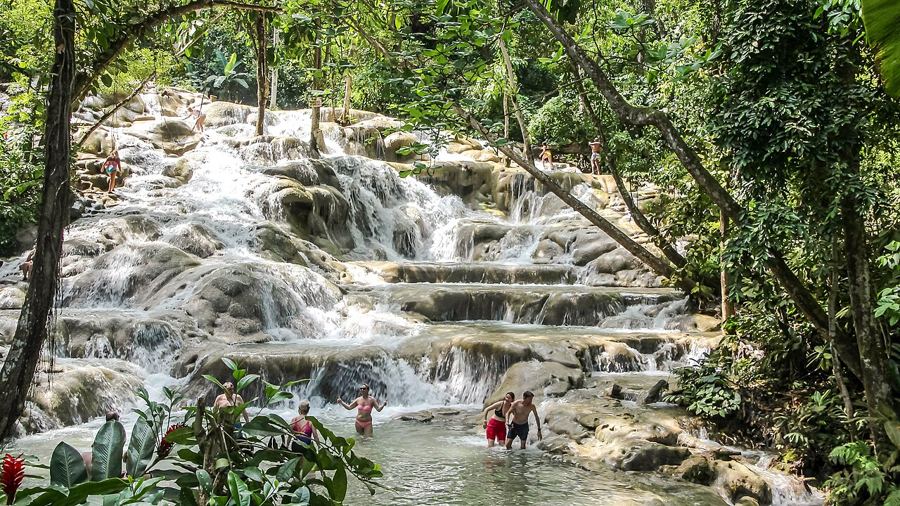 Ocho Rios, Dunn's River and Fern Gully
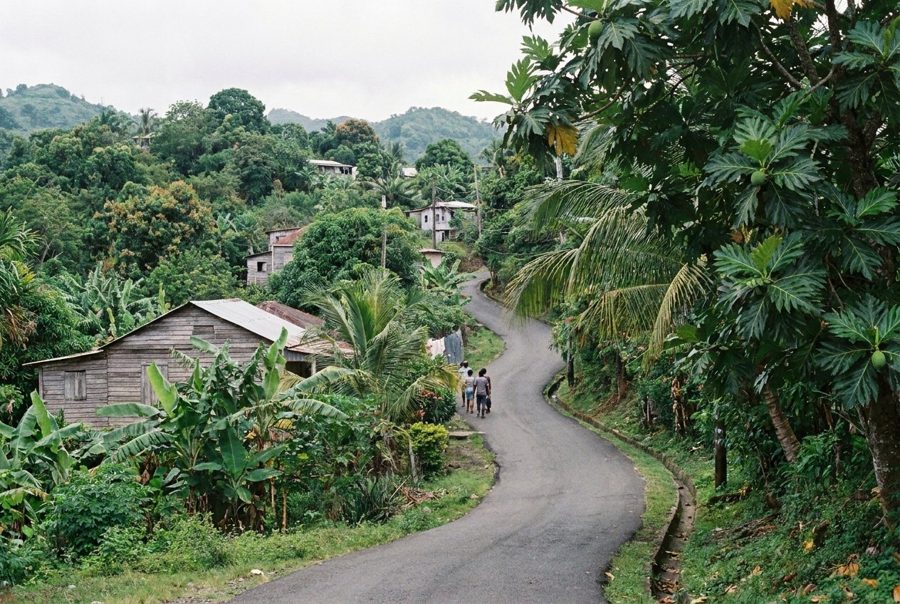 Nine Mile, in the hills of St Ann
 Port Antonio and the green Portland coast